Hotel marketing has changed beyond recognition over the past few decades. New channels, new technology, and a fundamentally different relationship between hotels and their guests have transformed the way the industry operates. But amid all that change, some of the most important principles remain exactly the same.
We sat down with Pamela Carvell — Life President of the Hotel Marketing Association, and one of the most experienced voices in hospitality — to reflect on what the industry has lost, what it has gained, and where the real opportunities lie going forward.
What hotels used to get right
There was a time when hotels had complete control over their marketing. They printed the brochures, they managed the photography, and crucially, when a guest wanted to make a booking, they picked up the phone.
That phone call was more valuable than many hotels realised. It was the first point of contact, and it was an opportunity to upsell, engage, and learn. Was the guest celebrating something? Visiting family? Just passing through? That information shaped everything that followed.
“You genuinely knew your customer right from that first point of contact,” Pamela reflects. “You had control over what they’d seen and what they’d read about you.”
Today, that control is largely gone. Guests arrive having already formed an opinion that’s shaped by reviews, social media posts, influencer content, and third-party platforms that hotels often have little visibility of, let alone influence over.
The personalisation problem
Data has given hotels an extraordinary opportunity to recreate that personal relationship at scale. The problem is that having the data and using it well are two very different things.
Pamela is direct on this point. She describes being a loyal customer of a well-known brand, holding a VIP card, responding regularly to their emails, and yet continuing to be sent promotions for products she cannot consume due to a dairy allergy. Not once, but consistently, over time.
“That’s not personalisation. It’s just noise.”
The irony is that the data to get it right almost certainly exists. The issue is whether anyone is actually using it thoughtfully, or whether personalisation has become a box-ticking exercise rather than a genuine attempt to understand and respond to individual guests.
Historically, hotels managed this through people. A good front of house team knew the regulars. They remembered what you ate, how you took your coffee, whether you preferred a quiet table. Technology can replicate that, but only if it is used with the same level of care and intention.
Know who your guests actually are
One of the more provocative points Pamela makes is about the hospitality industry’s relationship with the concept of personal service. There is an assumption, particularly among more traditional operators, that warmth and human interaction are always what guests are looking for. Increasingly, that simply isn’t true.
“There’s a huge percentage of the market — and I’m one of them — who don’t want a waiter trying to make conversation when I’m having dinner,” she says. “I’ve gone out to interact with the people I’m with, not to have someone trying to chat to me.”
For a growing number of guests, the ideal experience is seamless, efficient, and largely self-directed. They want to check in without queuing, order via a QR code, and check out without speaking to anyone. That is not a failure of hospitality, it is hospitality delivered on their terms.
The marketing implication is significant. Before deciding how to position and promote a hotel, marketers need to be honest about what their guests actually want, not what the industry has traditionally assumed they want.
The power of reviews and social listening
One of the most significant shifts in hotel marketing over the past two decades is the guest’s right to respond. Where once the only feedback mechanism was a paper questionnaire that fewer than one percent of guests ever completed, today’s guests can share their experience with the world in seconds.
This is both an opportunity and a risk, and Pamela argues that too many hotels are failing to take the opportunity seriously.
“You have an amazing tool,” she says. “Your customers are telling you exactly what your USPs are — which may not be the USPs you thought people would really care about.”
She gives the example of a hotel investing heavily in promoting its lobby and artwork, while guests are consistently raving about a cocktail that a talented bartender quietly makes. The reviews know. The marketing doesn’t reflect it.
AI makes this easier than ever. It can trawl through hundreds of reviews across multiple platforms, surface patterns, and deliver a clear picture of what guests genuinely value. Used well, that insight should feed directly into marketing strategy.
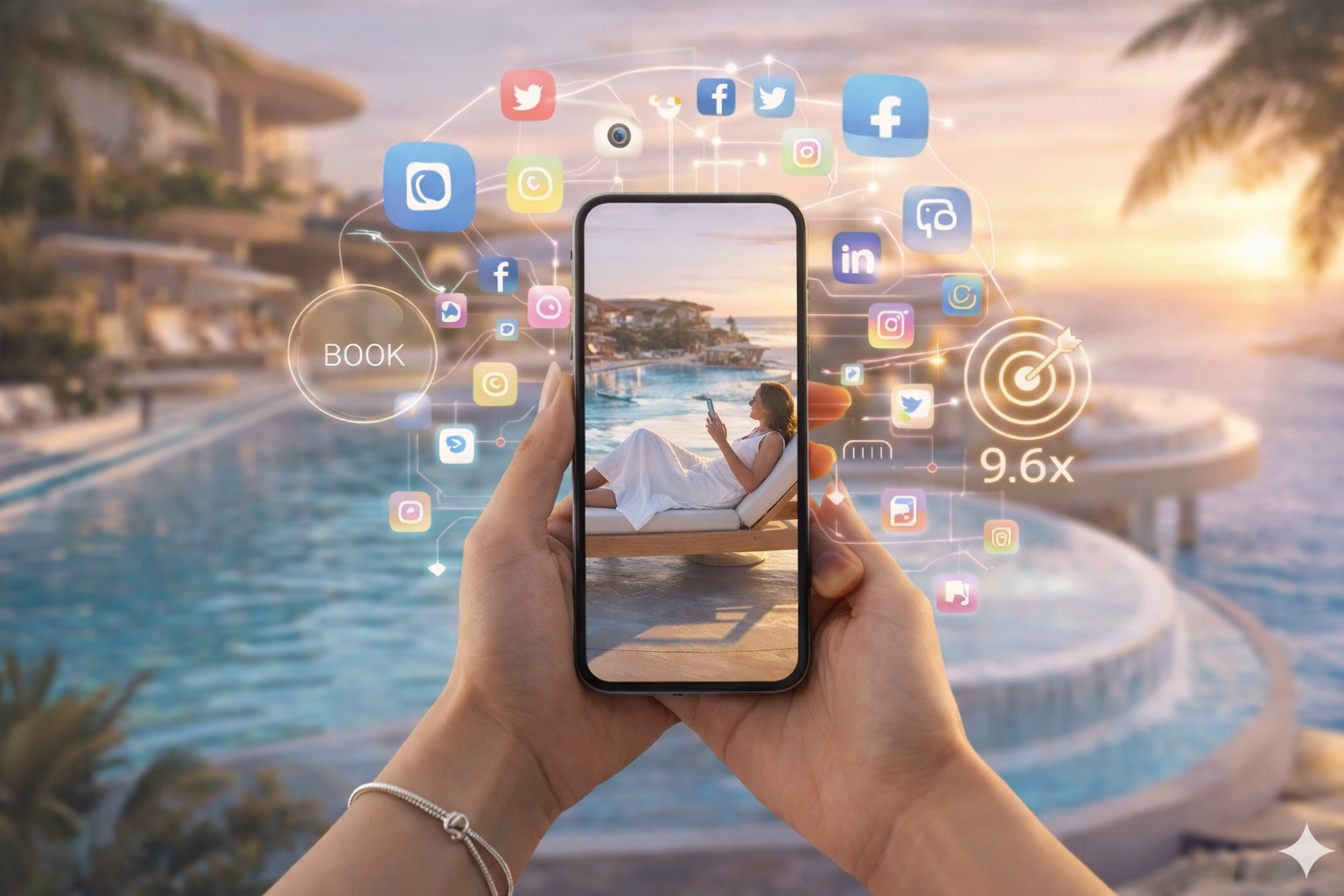
The same logic applies to social media. Guests who have had a brilliant stay may never write a formal review, but they will post on Instagram or TikTok. Monitoring those channels, and responding where appropriate, is an increasingly important part of the marketing function.
The brand problem
Ask most hotel marketers to articulate their brand essence — the single sentence that captures the heart and soul of what their hotel stands for — and many will struggle.
Pamela is frank about why this matters. Nike’s brand essence is authentic athletic performance. Apple’s is simplicity that inspires creativity. These are not abstract exercises. They are the foundation on which every piece of communication, every campaign, and every customer interaction is built.
“Every hotel, no matter how small or large, should have very simple statements of their brand values, brand personality and brand essence,” she says. “And the entire team should understand them — because everybody working in the hotel should deliver on them.”
The risk of getting this wrong has never been higher. In an era where a single poorly-judged social media post can go viral and undo months of brand-building, everyone who communicates on behalf of a hotel — whether that is an agency, a social media manager, or a chatbot — needs to understand what the brand stands for and where the lines are.
Pamela illustrates this with a story about Paddy Power, who posted a cynical dig at Coventry City on the day of their promotion to the Premier League. Within hours, thousands of fans were publicly declaring they would never use Paddy Power again and tagging competitors in the process. A later attempt to walk the comment back did little to undo the damage.
“Whoever was on duty for those few hours didn’t fully understand the brief,” she says. “And that will be out there, getting dragged up again and again.”
AI: tool, not replacement
Few topics dominate marketing conversations right now more than AI, and hotel marketing is no exception. Pamela is a genuine enthusiast — she uses ChatGPT regularly, has given it a name, and finds it invaluable for research, inspiration, and exploring ideas. But she is equally clear about its limits.
On content creation, her view is straightforward: AI can be a brilliant prompt, a sounding board, a starting point. But allowing it to write your content for you is a mistake, and one that is increasingly being punished.
“The algorithms are going to get more and more clever,” she warns. “They can detect what is being created by AI and they’re always going to push authenticity higher than something that’s been AI generated.”
The same caution applies to chatbots managing social media responses. The British Airways example she raises is a telling one; a brand spending millions to maintain its identity, undermined by automated responses that fail to read the room when a distressed passenger needs genuine human help.
“The quality of the brief is very important as to what a chatbot should respond to and what you need a human being to step in on,” she says.
The lesson is not to avoid AI. It is to use it thoughtfully, brief it carefully, and always know when a human may need to take over.
The fundamentals still matter
Pamela’s closing advice was characteristically direct:
Start defining your brand values, brand personality and brand essence, and make sure everyone in your team understands them.
Stop expecting great marketing from people who have never stayed in your hotel, eaten in your restaurant, or experienced your competitors firsthand.
Double down on authentic social content. Trust your team to create it. Respond when people engage with it. The hotels doing this well are seeing the results.